¡Hablamos español!
¡Hablamos español!
Home
/ Services
/Braces
955 Dairy Ashford Rd · Energy Corridor
Fixed braces for kids, teens and adults, fitted and adjusted at the same practice you already come to for check-ups. You'll know the full cost and the likely timeline before a single bracket goes on.
Every age treated
Costs in writing first
Saturday appointments
¡Hablamos español!
Straightening that doesn't depend on willpower
Clear aligners get most of the attention now, but braces in Houston are still the treatment that handles the hardest cases — and they're often the better choice rather than the old-fashioned one. Brackets are bonded to the teeth and stay there, which means they work twenty-four hours a day whether or not anyone remembers to put them back in.
That single difference matters more than it sounds. Aligner treatment assumes twenty to twenty-two hours of wear a day, every day, for a year or more. For a fourteen-year-old, or for an adult whose job involves constant talking and eating out, that assumption frequently doesn't survive contact with real life. Braces remove the question entirely.
They also move teeth in ways aligners struggle with — significant rotations, teeth that need bodily movement rather than tipping, large vertical corrections and severe crowding. If your case falls into that territory, a good dentist will tell you so rather than sell you the more fashionable option.
Treatment is provided at 955 Dairy Ashford, alongside your normal check-ups and cleanings, so there's no second practice to register with.
Stainless steel brackets and wires. The most efficient option for complex movement, the most durable, and the least expensive. Modern brackets are far smaller than the ones most parents remember.
Most cases · lowest cost
Tooth-coloured brackets that blend into the enamel and read as far less obvious in photographs. They work the same way as metal, cost more, and need a little more care to avoid staining.
Discreet · adults & older teens
Brackets with a built-in clip instead of elastic ties, so there are no coloured bands to change. Often means fewer adjustment visits, which is worth something if you're driving in from Katy.
If your case is mild to moderate and you'd rather nothing were fixed to your teeth, aligners may suit you better. We fit those here too.
Honest guidance
We fit both, so there's no incentive to push you toward one. These are the situations where braces genuinely do the job better.
Teeth that need turning significantly, or a jaw with nowhere near enough room, respond far more predictably to fixed brackets and wires.
Deep bites, open bites and significant overjet usually need forces that aligners can't reliably deliver on their own.
If you know — or your teenager knows — that trays will end up in a napkin at lunch, braces take compliance out of the equation completely.
Moving a whole tooth including its root, rather than tipping the crown, is something brackets and a full wire handle better.
Younger mouths are still changing. Fixed appliances give more control over that change than a series of trays sized months in advance.
Metal braces are typically the least expensive route to a properly straight result, which matters when a family is treating more than one child.
If none of the above describes your case, aligners may well be the better option — and we'll say so at the consultation.
Start to finish
Most treatment runs between eighteen months and three years. Yours depends on how far the teeth have to travel, not on anything you can rush.
One visit · about 45 minutes
An examination, photographs, X-rays and a digital scan or impressions. This is where we work out what's actually achievable and whether braces or aligners suit your case better.
Same visit or shortly after
You get the treatment sequence, the expected duration and the total figure in writing, including retainers at the end. Insurance benefits are verified before you decide anything.
One visit · 60–90 minutes
Brackets are bonded to each tooth and the first wire is fitted. It doesn't hurt — there's no drilling and no injection. Expect the teeth to feel tender for three or four days afterwards, and plan soft food for the first week.
Every 4–8 weeks
Short appointments to change the wire and check progress. Usually fifteen to thirty minutes, and we'll try to schedule them around school or work — including Saturdays.
Typically 18–36 months in
Removal takes under an hour and is painless. The teeth get a thorough clean and polish, and you see the result the same day.
Ongoing, for life
Teeth drift back if nothing holds them. You'll get retainers and clear instructions on wearing them. This is where most relapse cases come from, so we're direct about it: the retainer is not optional.
What to expect
The braces consultation is a proper assessment, not a sales appointment. It takes about forty-five minutes and covers everything needed to give you a real answer rather than a range.
We examine and take records. Photographs, X-rays and a scan or impressions of your teeth, plus a look at your gums — orthodontics can't start on unhealthy gums, so anything that needs treating first gets flagged here.
We explain what's realistic. Which teeth will move, how far, roughly how long it takes, and whether braces or aligners are better for your particular case.
You get the cost in writing. The total, what insurance covers, and the payment options. Nothing gets bonded to your teeth on the day you first ask about it.
Bring your insurance details, and if you're booking for a child, bring anything their previous dentist has said about crowding or bite.
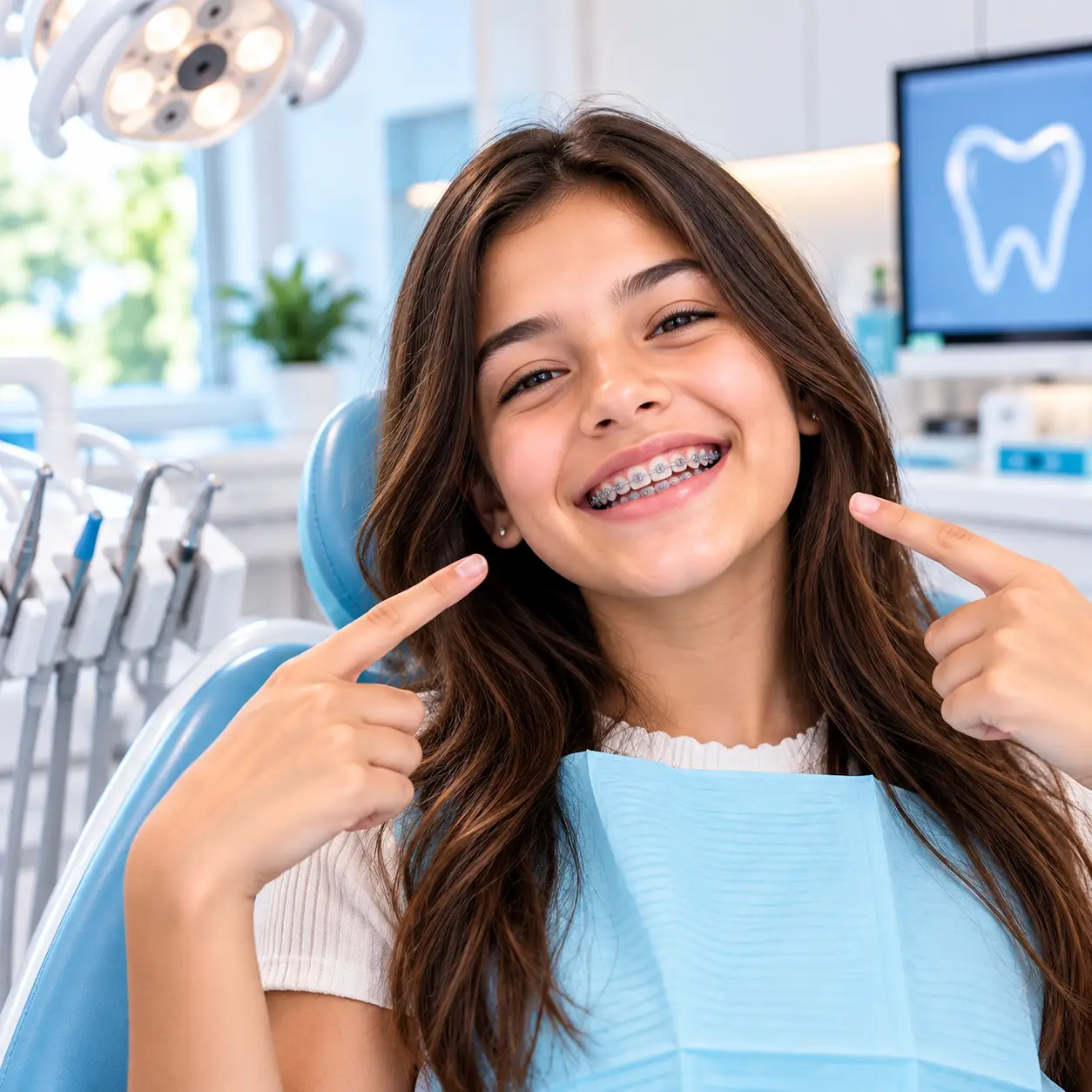
What it costs
Orthodontics is priced per case rather than per appointment, because two people with the same bracket type can need very different amounts of work. The figure you're quoted at the consultation is the figure you pay.
Quoted in full at your consultation, with the adjustment visits and retainers included in the figure rather than added later.
Many dental plans carry a separate lifetime orthodontic maximum that works differently from your annual maximum. We check yours before you commit.
Financing is available for qualifying patients, and the pre-qualification application won't affect your credit score. Without insurance, our in-house membership plan covers your exams, cleanings and X-rays for one annual fee while you're in treatment.
Ask About CostWe provide both, so here's the straight comparison rather than a pitch for whichever we'd rather sell.
Durations are typical ranges, not guarantees. Your own treatment time depends on the movement required and how closely instructions are followed.
Younger patients
Most children should have their bite assessed by around age seven. That's not the age to start treatment — it's the age when a dentist can first see how the adult teeth and jaw are developing, and whether anything needs steering.
Full braces usually go on between eleven and fourteen, once most of the adult teeth are through. Starting while the jaw is still growing means some corrections can be made that become much harder in adulthood.
Some children benefit from early treatment — a shorter first phase around eight or nine to create space or correct a crossbite, followed by full braces later. We only recommend it where it genuinely reduces what's needed afterwards.
Teenagers and compliance. Braces are frequently the right call here for a practical reason: nothing depends on a fourteen-year-old remembering to put trays back in after lunch.
Children under fourteen on our membership plan pay $299 a year, which covers their exams, cleanings and X-rays throughout treatment.
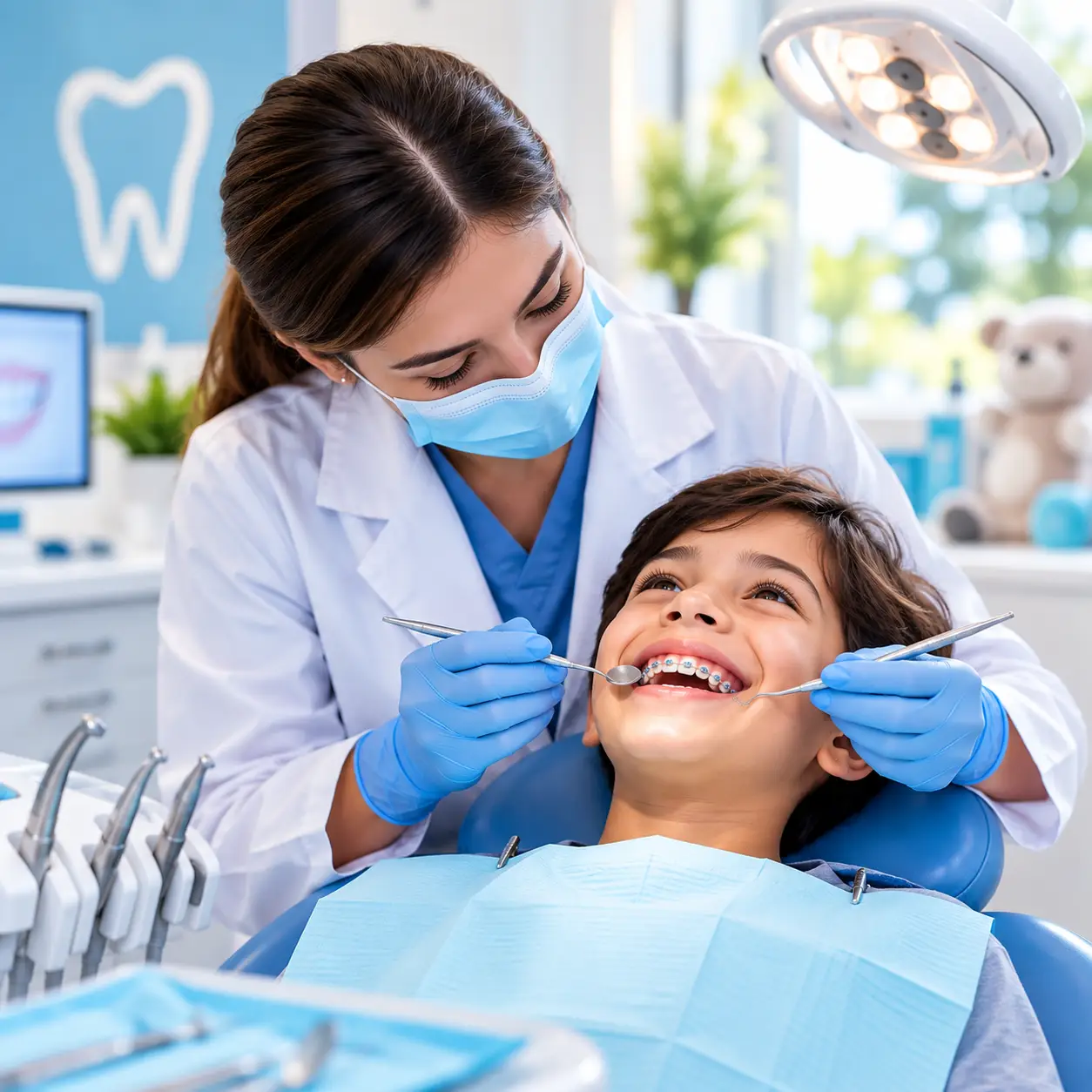
It isn't just for teenagers
Roughly one in four orthodontic patients in the US is now an adult. Teeth move at any age — bone remodels throughout life, which is the whole mechanism braces rely on.
We treat adults well into their fifties and beyond. What matters is healthy gums and adequate bone support, which we assess before starting.
Very common, and usually because the retainer stopped being worn. A second round is often shorter and less involved than the first.
If you present to clients or spend your days on video calls, tooth-coloured brackets are far less noticeable than most people expect.
Where veneers, crowns or implants are planned, moving the teeth into the right position first usually means a better and more conservative final result.
Crowded teeth are harder to clean and wear unevenly. Straightening often reduces the fillings and gum treatment needed over the following decades.
Adjustment visits are short, and we run Saturdays 9 to 3 — useful when you're driving in from the office parks along Eldridge.
Questions we get asked
Warm words
Find us in 77079
Just off I-10 in the Energy Corridor, five minutes from Katy and Memorial, with free parking at the door.
Call
(281) 809-3595
Text
(832) 888-1476
finedentalcarec@gmail.com
Address
955 Dairy Ashford Rd, Suite 107
Houston, TX 77079
Monday – Friday
9:00 AM – 5:00 PM
Saturday
9:00 AM – 3:00 PM
Sunday
Closed
955 Dairy Ashford Rd #107, Houston, TX 77079
Patients travel to us from
Ready when you are
An assessment, a realistic timeline and the full cost in writing — all in one visit, with no obligation to go ahead. Saturdays included.